Showing posts with label National News. Show all posts

Saturday, January 24, 2015

This time around, Kansas City is braced for an embrace of La Raza

Speaker after speaker captured differing pieces of this truth:

The year 2015 is far removed from the worries of the last time the National Council of La Raza planned its national convention for Kansas City.

Mayor Pro Tem Cindy Circo on Tuesday gracefully put to rest the disgrace that laid the groundwork for the NCLR conference to be held this July, rather than six summers before. Circo avoided mentioning former mayor Mark Funkhouser by name.

But he was the one who set in motion a backlash that caused the civil rights organization to yank its 2009 convention from the city. Funkhouser appointed a woman to the parks board who had joined a local fledgling Minuteman group known for illogical rants against immigrants and patrolling the U.S.-Mexico border. He wouldn’t back down, even after the woman said she didn’t want to be on the board.

The past controversy feels so distant. Now there is wide support for and understanding of the conference’s importance. And there is the good luck of timing. National attention looks more at the Latino population, a reflection of its growing clout.

Circo’s remarks came at a luncheon held by the Central Exchange as a lead-up to the convention. Those attending represented a wide range of bistate elected leadership and a host of other influential people.

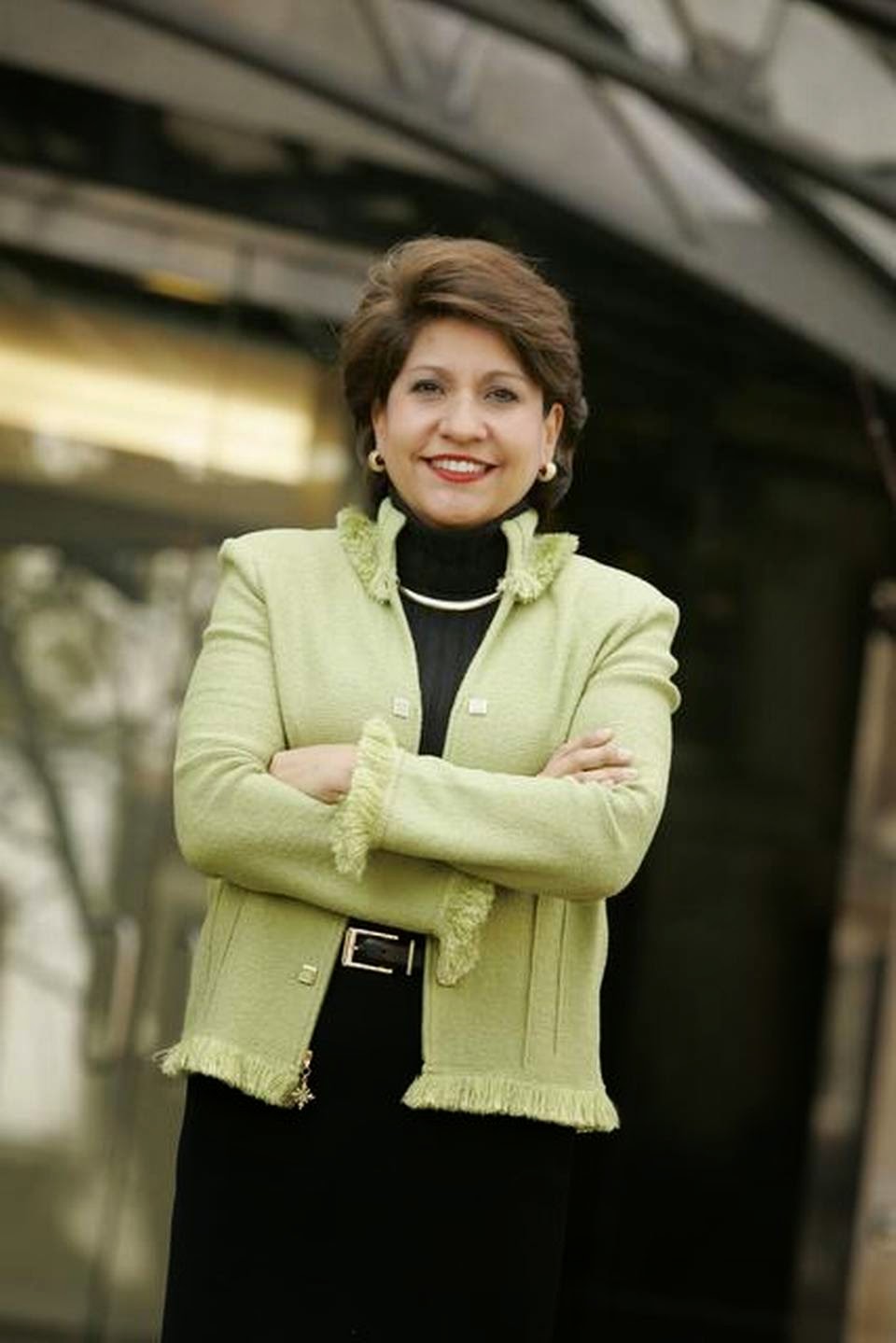
Kansas City, Kan., Mayor Mark Holland said the convention will be an opportunity to showcase the economic boons from the area’s strong immigrant history. He noted that KCK has no ethnic majority and mirrors national trends in the way immigration leads its population growth. Janet Murguía, president and CEO of NCLR, is also a Kansas City, Kan., native.

Past NCLR conferences have drawn Presidents Barack Obama, Bill Clinton and George W. Bush. Given that campaigning for the 2016 presidential race is gearing up, appearances by politicians courting votes and limelight are all but guaranteed for the Kansas City event.


Murguía has played a major advocacy role for Hispanic attainments in business, education and other needs, including immigration. She has called out Obama for his record-breaking numbers of deportations, labeling him the “deporter in chief.” But she has pressed equally hard for comprehensive reforms that can only come with bipartisan support.

“We can find a common-sense solution for folks to get right with the law.”


Read more here: http://www.kansascity.com/opinion/opn-columns-blogs/mary-sanchez/article7804062.html#storylink=cpy

Thursday, November 20, 2014

Obama allies, critics debate immigration orders

David Jackson and Alan Gomez, USA TODAY

President Obama put the final touches on a major immigration speech Thursday, setting up a major political battle with newly empowered Republicans over executive orders that would delay deportations of up to 5 million migrants.

While White House officials and Democratic lawmakers described Obama's imminent executive orders on immigration are necessary and lawful, Republicans called them an abuse of presidential power.

"For the good of the American people, the President must use his authority under current law to do what he can to fix our broken immigration system," said U.S. Sen. Dick Durbin, D-Ill.

Sen. Mitch McConnell, R-Ky., pointed out that Republicans return in January with a new majority in the Senate and an expanded majority in the House, and are considering a "variety of options" to respond to Obama's executive orders, including possible lawsuits.

"Make no mistake," McConnell said. "When the newly elected representatives of the people take their seats, they will act."

Obama is scheduled to address the nation shortly after 8 p.m. in a speech expected to cover border security and high-tech visas as well as the legal status of migrants.

The president briefly plugged his plan Thursday morning while honoring winners of the National Medal of Science and National Medal of Technology and Innovation.

"Part of staying competitive in a global economy is making sure that we have an immigration system that doesn't send away talent, but attracts it," he said.
In announcing the speech Wednesday on Facebook, Obama said: "What I'm going to be laying out is the things that I can do, with my lawful authority as president, to make the (immigration) system work better — even as I continue to work with Congress and encourage them to get a bipartisan, comprehensive bill that can solve the entire problem."
In e-mail statements and television interviews, the White House and its supporters argued that Obama is acting because House Republicans are blocking passage of a major immigration bill that the Senate passed in 2013. They also note that previous presidents, including Republicans Ronald Reagan and George H.W. Bush, issued executive orders granting legal status to migrants.
"The president does have significant authority," White House press secretary Josh Earnest said on MSNBC. "This is authority that has been used by Republican presidents."
The Republican position: Reagan and Bush did executive orders as adjustments to a congressional immigration bill passed in 1986, while Obama is going around Congress. Some described the new executive orders as a political power grab designed to appeal to Hispanic voters, while ignoring GOP election victories in this month's congressional elections.

GOP members also pointed out that, in recent years, Obama himself has questioned whether he has the legal authority to defer deportations.
"If the president truly follows through on this attempt to impose his will unilaterally, he will have issued a rebuke to his own stated view of democracy," McConnell said in a Senate floor speech. "And he will have contradicted his past statements on this very issue.
Obama is considering protecting up to 5 million undocumented immigrants from any deportation proceedings. Most of those are expected to be parents with children who were born in the U.S., meaning they are U.S. citizens. He may also consider expanding the pool of young undocumented immigrants who have been protected under a 2012 program, or granting protections to undocumented immigrants who have been in the country for long periods of time.

Department of Homeland Security Secretary Jeh Johnson said Wednesday that the president will also improve border security. Only Congress can order the hiring of thousands of Border Patrol agents, but Obama can increase their salaries and redeploy immigration agents spread around the country to the southwest border.

The president is also considering changes to a program called Secure Communities, which helps local police check the immigration status of suspects they've arrested for local crimes. That plan has angered many immigration advocates and Democrats who say it turns local police into immigration agents, while Republicans and some law enforcement officials say it's critical to track immigration violators around the country.

Obama will follow up Thursday night's address with a Friday event at a high school in Las Vegas, Nevada, a state with a large number of undocumented migrants.

White House aides said Obama still wants to work with Congress on a legislative bill that would supersede the executive orders. While the new orders could affect up to 5 million people, there are an estimated 11 million in the United States illegally.

"There are some steps the president can't take and require legislation," Earnest said on Fox News. "Tonight's action represents a first step."


White House Communications Director Jennifer Palmieri, appearing on MSNBC, said that "this is not the way we want to proceed. It's not solving the problem permanently."

Saturday, November 15, 2014

US to grant refugee status to some children

WASHINGTON-The U.S. government will launch a program in December to grant refugee status to some people under the age of 21 who live in Guatemala, Honduras and El Salvador and whose parents legally reside in the United States.

U.S. officials say parents can ask authorities free of charge for refugee status for their children in the Central American countries, which are plagued by poverty and vicious gang violence. The program does not apply to minors who have arrived in the U.S. illegally.


Vice President Joe Biden announced the program Friday at the Inter-American Development Bank, where the presidents of the three Central American countries will present a plan to stem child migration from their countries.

U.S. officials said that children deemed refugees will be able to work immediately upon arrival in the U.S., opt for permanent residency the following year and for naturalization five years later. They did not say how long the process of receiving refugee status will take.

Central American children who meet the requirements will be part of a quota of 4,000 people from Latin America receiving refugee status each fiscal year, officials said. The U.S. quota of Latin America refugees currently consists of Cubans and Colombians.

Applicants who don't meet the requirements will be evaluated to see if they can be admitted conditionally under a non-permanent migratory status that allows them to work temporarily in the U.S.

Biden's announcement comes as President Barack Obama is poised to unveil a series of executive actions on immigration that will shield possibly around 5 million immigrants living in the country illegally from deportation, according to advocates in touch with the White House.

House Judiciary Committee Chairman Bob Goodlatte, R-Va., criticized the plan, which he described as "government-sanctioned border surge" if Obama acts as expected.

"The policy announced today could open Pandora's box, allowing potentially even more people to come to the United States. This is bad policy and undermines the integrity of our immigration system," Goodlatte said in a news release.

The program aims to be a legal and safe alternative to the long and dangerous journey some Central American children take north to reach the U.S. and to reunite with their parents in the U.S. Tens of thousands of unaccompanied child and teenage migrants showed up at the U.S. border earlier this year.


On Wednesday, Salvadoran Foreign Minister Hugo Martinez said the plan includes measures to stimulate economic growth, improve public safety, improve government agencies and provide better education and training opportunities.

Monday, September 1, 2014

National Latino Organizations Express Solidarity With Ferguson After The Death Of Michael Brown


As Ferguson, Mo., has become a flashpoint for fury and distrust between the black community and law enforcement after the death of Michael Brown, Latino organizations on Friday began to come out and express solidarity with the Brown family and those protesting on their behalf.
Leaders of the National Hispanic Leadership Agenda, a nonpartisan association of 37 of the leading Latino organizations across the country, sent BuzzFeed statements on Brown’s death.
“Mothers of color should not have to fear that our children will not be safe in our neighborhoods and city streets,” said Jessica González-Rojas, Executive Director at the National Latina Institute for Reproductive Health. “The militarization and violent conduct, whether of police or immigration enforcement officials, are issues of human rights and racial justice, and warrant full investigation and accountability measures. My deepest condolences to Michael Brown’s family and all communities facing state violence.”

José Calderón, President of the Hispanic Federation, said Latinos — like Americans of all backgrounds – are collectively outraged at what transpired on the streets of Ferguson.

He said they “stand with all who call for a swift, just investigation to determine how another unarmed black young man was killed by those who are given the solemn responsibility to protect and serve all of us.”

Juan Carlos Areán, Senior Director of Casa de Esperanza: National Latin@ Network, an organization committed to ending violence, said he commended the recent shift in tone towards a response that values and includes community participation. Areán cited the change in security leadership when St. Louis police were pulled from Ferguson streets and Captain Ron Johnson of the Missouri Highway Patrol was put in charge of the law enforcement response.

Brent Wilkes, executive director of the League of United Latin American Citizens (LULAC), said his organization will be vigilant in ensuring that justice and accountability are served.

“Our prayers go out to Michael Brown’s family and friends who, instead of planning a graduation party, are planning his funeral. The pain and anguish of losing a child are unimaginable, especially when the child was taken at the hands of those sworn to protect and serve the community,” he said in a statement.

A spokesman from National Council of La Raza (NCLR), one of the top national Latino organizations, was not available for comment at the time of publication.

Immigrants rights organizations also expressed support, many feeling that it was appropriate for them to join in solidarity with a community — black Americans — who they say have been fighting criminalization for far longer.
“We’ve been fighting really hard to get the president to stop deportations and that has been a criminalization of immigrants and Latinos. It’s high time we join forces with communities that have been fighting police brutality and mass incarceration for far longer,” Marisa Franco of the National Day Laborer Organizing Network (NDLON), told BuzzFeed. “Mike Brown is not the first, but the latest in an epidemic of violence. We say, not one more black person murdered by police, not one more struggle fought alone, not one more life criminalized as we continue our struggle for not one more deportation.”

Felipe Sousa-Rodriguez, deputy managing director of United We Dream said it stands in solidarity with the Brown family and with the African-American community “for whom tragedies like this happen much too often.”
Marielena Hincapié, executive director of the National Immigration Law Center, said that especially since 9/11, too much of the focus has been on national security, while African-American communities have been over-policed.

“The level of mistrust and distrust that has been sown, whether against a black man or a ‘suspicious’ undocumented person, is the same with racial profiling, discrimination, and violence,” she told BuzzFeed.

Franco said that while she doesn’t want to conflate immigrant rights and what’s happening to the black community, she said they are born from the same place.
She called on other Latino and immigrant organizations to come out in support of those protesting in Ferguson.

“Latino and immigrant rights organizations need to speak out and offer support for whatever is needed,” she said.
Hincapié said it’s all part of the same struggle.
“I think our duty is about organizations that care about justice, whether immigrant justice, racial justice, social justice, or economic justice, it’s all part of the same struggle,” she said.

“Too much injustice is happening to our young people, especially our black and brown children.”

Thursday, March 27, 2014

Latinos being left behind in health care overhaul

By RICARDO ALONSO-ZALDIVAR
Associated Press
The nation's largest minority group risks being left behind by President Barack Obama's health care overhaul.

Hispanics account for about one-third of the nation's uninsured, but they seem to be staying on the on the sidelines as the White House races to meet a goal of 6 million sign-ups by March 31.

Latinos are "not at the table," says Jane Delgado, president of the National Alliance for Hispanic Health, a nonpartisan advocacy network. "We are not going to be able to enroll at the levels we should be enrolling at."

That's a loss both for Latinos who are trying to put down middle-class roots and for the Obama administration, experts say.

Hispanics who remain uninsured could face fines, not to mention exposing their families to high medical bills from accidents or unforeseen illness. And the government won't get the full advantage of a group that's largely young and healthy, helping keep premiums low in the new insurance markets.

"The enrollment rate for Hispanic-Americans seems to be very low, and I would be really concerned about that," says Brookings Institution health policy expert Mark McClellan. "It is a large population that has a lot to gain ... but they don't seem to be taking advantage." McClellan oversaw the rollout of Medicare's prescription drug benefit for President George W. Bush.

The Obama administration says it has no statistics on the race and ethnicity of those signing up in the insurance exchanges, markets that offer subsidized private coverage in every state. Consumers provide those details voluntarily, so federal officials say any tally would be incomplete and possibly misleading.

But concern is showing through, and it's coming from the highest levels.

"You don't punish me by not signing up for health care," Obama told Hispanic audiences during a recent televised town hall. "You're punishing yourself or your family."

Like a candidate hunting for votes in the closing days of a campaign, Obama was back on Hispanic airwaves Monday as Univision Radio broadcast his latest pitch.

"The problem is if you get in an accident, if you get sick, or somebody in your family gets sick, you could end up being bankrupt," the president said.

Only last September, three of five Latinos supported the national overhaul, according to the Pew Research Center. Approval dropped sharply during October, as technical problems paralyzed the health care rollout and the Spanish-language version of the HealthCare.gov website. Hispanics are now evenly divided in their views.

A big Gallup survey recently showed tepid sign-up progress. While the share of African-Americans who are uninsured dropped by 2.6 percentage points this year, the decline among Hispanics was just 0.8 percentage point.

In California, where Latinos account for 46 percent of those eligible for subsidized coverage through the exchange, they represented 22 percent of those who had enrolled by the end February and had also volunteered their race or ethnicity. The state is scrambling to improve its numbers in this week's home stretch.

Experts cite overlapping factors behind disappointing Latino sign-ups:

— A shortage of in-person helpers to guide consumers. "In our community, trust and confidence is so important — you want to make sure it's OK before you share all this personal information," Delgado said. There's been a lack of "culturally sensitive" outreach to Latinos, added Rep. Lloyd Doggett, D-Texas.

— Fear that applying for health care will bring unwelcome scrutiny from immigration authorities. The health insurance exchanges are only for citizens and legal U.S. residents, but many Hispanic families have mixed immigration status. Some members may be native born, while others might be here illegally. Obama has tried to dispel concerns, repeatedly saying that information on applications will not be shared with immigration authorities.

—The decision by many Republican-led states not to expand Medicaid, as they could under the law. With states like Texas and Florida refusing to expand Medicaid, many low-income Latinos will remain uninsured. However, Medicaid expansion is separate from coverage on the exchanges, which is available in every state. Latinos don't seem motivated to sign up for that, either.

— Technical difficulties that delayed the federal government's Spanish-language enrollment site. CuidadoDeSalud.gov has also had to cope with clunky translations.


Delgado's group is asking the administration to extend the March 31 deadline for Latinos who got tangled up in website problems. Officials say that's not likely. However, they haven't ruled out a little extra time for anyone who started an application but wasn't able to finish by the deadline.

A recent enrollment outreach event in Houston drew Mary Nunez, who works with her self-employed husband in the florist business. They have been uninsured since she lost her job last year. In that time, she's only been to a doctor once — to get a refill on blood-pressure medication.

"Praise the Lord, we haven't gotten sick," said Nunez, adding that she knows luck eventually will run out.


She made an appointment for in-person assistance to review her options on the Texas exchange. But since the couple's income fluctuates from month to month, she was uncertain how much they could afford. A deadline is looming, she noted, and "Hispanics always leave it for the last minute."